
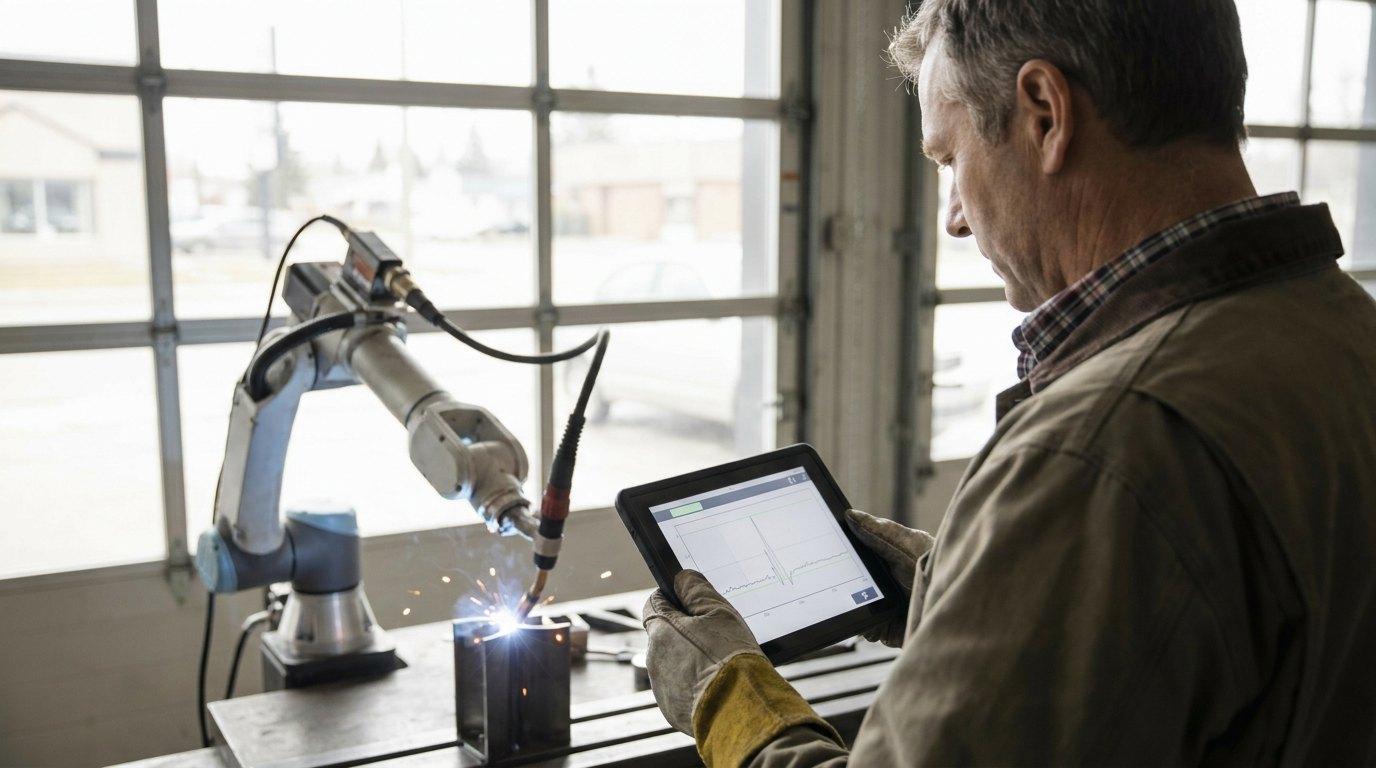
AI Automation for Manufacturing Canada: The SMB Growth Engine
How AI automation for manufacturing in Canada helps SMBs boost efficiency, cut waste, and compete globally despite high costs.
Published Updated
Why Read This?
This article is a must-read for Canadian manufacturing SMBs looking to overcome common hurdles and thrive. It demystifies AI automation, showcasing how accessible, cost-effective solutions can transform challenges like machine downtime and labor shortages into unprecedented growth opportunities. Discover a practical roadmap to implement AI, boost your bottom line, and secure your competitive edge.
The call came at 2:15 AM. A critical CNC machine at a mid-sized Ontario parts fabricator had seized, halting the entire production line for a high-priority automotive order. The frantic search for an on-call technician, the costly overnight repairs, and the subsequent late delivery penalties erased the profit margin on a week's worth of work. This scenario isn't a rare catastrophe; for many Canadian manufacturing SMBs, it's a recurring nightmare that chips away at their competitiveness. What if that machine had told you it was going to fail three days before it happened? This isn't science fiction. This is the new reality powered by Artificial Intelligence, and it's becoming the most critical tool for survival and growth in Canada's industrial heartland.
For too long, the conversation around AI and robotics has been dominated by images of massive, fully automated factories owned by multinational giants. This has created a perception that AI automation for manufacturing in Canada is a luxury reserved for those with nine-figure budgets. The reality, however, has shifted dramatically. Today, accessible, scalable, and cost-effective AI solutions are poised to revolutionize small and medium-sized manufacturing operations, turning persistent challenges like labour shortages, quality control issues, and rising operational costs into opportunities for unprecedented growth and resilience.
This article unpacks the practical applications of AI for Canadian manufacturing SMBs. We will move beyond the hype and provide a clear-eyed look at how these technologies are solving real-world problems on the factory floor and in the back office. We will explore a strategic roadmap for implementation, from identifying your first high-ROI project to building a long-term vision for a smart factory. The goal is to demystify AI in industrial operations and empower Canadian business leaders to make informed, strategic decisions that will define their future.
The New Competitive Battleground for Canadian Manufacturers
The Canadian manufacturing sector is the backbone of the national economy, but it's currently navigating a perfect storm of challenges. Relying on traditional methods and legacy equipment is no longer a viable strategy for long-term success. Understanding this strategic context is the first step toward appreciating why the adoption of smart factory solutions Canada-wide is not just an option, but a competitive necessity. The pressures are coming from multiple fronts, creating an environment where efficiency and agility are paramount.
First, global competition has never been fiercer. Manufacturers in lower-cost jurisdictions are leveraging technology to close the quality gap, while advanced economies are doubling down on Industry 4.0 initiatives. For a Canadian SMB to compete, they must offer superior quality, faster turnaround times, and greater customization, all while managing costs. This is where AI-driven manufacturing process optimization AI becomes a game-changer, enabling a level of precision and efficiency that is impossible to achieve through manual processes alone.
Second, the domestic landscape presents its own hurdles. Persistent labour shortages, particularly for skilled trades, make it difficult to scale operations and maintain production schedules. Compounding this is the "silver tsunami" of retiring experienced workers, leading to a significant loss of institutional knowledge. Canadian small business automation helps mitigate this by automating repetitive tasks, allowing a smaller, more skilled workforce to focus on high-value activities that require human ingenuity and problem-solving. AI can also capture the expertise of veteran operators, codifying their knowledge into systems that guide newer employees.
Finally, supply chain volatility, exposed so starkly in recent years, demands greater foresight and adaptability. AI algorithms can analyze vast datasets to forecast demand more accurately, optimize inventory levels to reduce carrying costs without risking stockouts, and even predict potential disruptions. This proactive approach transforms the supply chain from a source of risk into a strategic advantage. For Canadian manufacturers, integrating this intelligence means building a more resilient and responsive operation, capable of weathering a storm that might sink less prepared competitors.
How AI Unlocks Manufacturing Process Optimization from Floor to Office
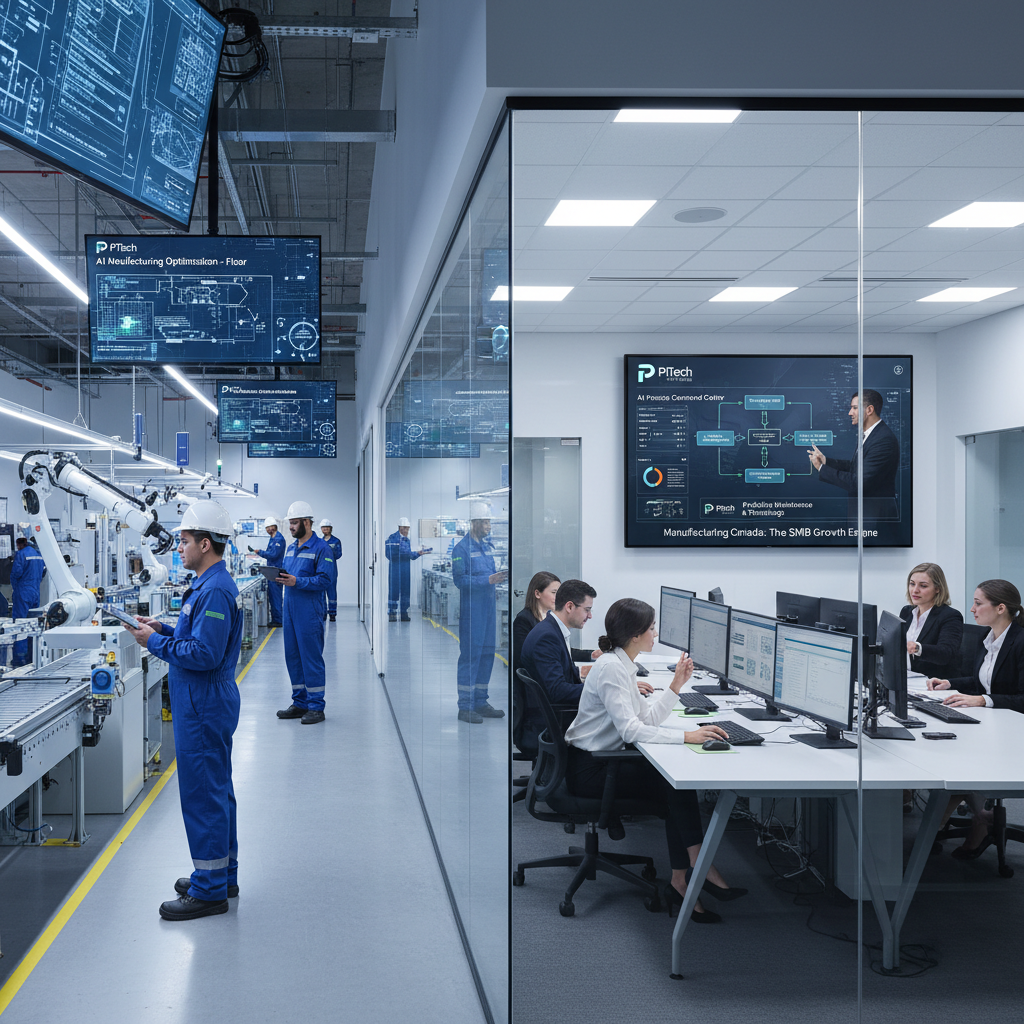
The true power of AI in manufacturing lies in its versatility. It is not a single tool but a collection of technologies that can be applied to virtually every stage of the production lifecycle. From predicting machine failures to ensuring flawless quality and streamlining administrative tasks, AI provides the data-driven intelligence needed to make smarter, faster, and more profitable decisions. For a Canadian SMB, this means tangible improvements in Canadian manufacturing efficiency that directly impact the bottom line.
Predictive Maintenance AI: Preventing Downtime Before It Happens
Unplanned equipment downtime is one of the most significant hidden costs in manufacturing. It not only halts production but also leads to cascading delays, missed deadlines, and expensive emergency repairs. The traditional approaches, reactive maintenance (fixing things after they break) and preventive maintenance (servicing on a fixed schedule), are inefficient. Reactive is costly and disruptive, while preventive often results in unnecessary servicing of healthy equipment or fails to catch unexpected issues.
Predictive maintenance represents a revolutionary shift. By installing affordable sensors on critical machinery to monitor variables like temperature, vibration, and energy consumption, you can feed this real-time data into an AI model. The model learns the machine's normal operating signature and can detect subtle anomalies that are precursors to failure. Instead of a sudden breakdown, you receive an alert: "Motor 3 on CNC Line 2 is showing a vibration pattern consistent with bearing wear. Failure is 85% likely within the next 72-96 hours." This allows you to schedule maintenance during a planned shutdown, order parts in advance, and completely avoid a costly production stoppage. The ROI is direct and substantial, stemming from maximized uptime, reduced repair costs, and extended asset longevity.
AI-Powered Quality Control: Achieving Near-Perfect Product Consistency
Human error is an unavoidable factor in manual quality inspection. Fatigue, distraction, and the sheer speed of modern production lines can lead to defects being missed, resulting in customer returns, reputational damage, and expensive rework or scrap. This is a critical area where AI automation for manufacturing Canada delivers immediate and transformative results. AI-powered computer vision systems offer a superior alternative.
These systems use high-resolution cameras and sophisticated machine learning algorithms to inspect products at superhuman speed and accuracy. An AI can be trained to identify microscopic cracks, subtle colour deviations, incorrect assembly, or printing errors far beyond the capability of the human eye. It works tirelessly, 24/7, without ever losing focus. For a food processor, it might mean detecting foreign contaminants. For an electronics assembler, it could be spotting a misplaced solder joint. The benefits are profound: defect rates plummet, material waste is significantly reduced, and brand reputation for quality is solidified. This level of quality assurance becomes a powerful selling point and a key differentiator in a crowded market.
Intelligent Production Scheduling and Resource Allocation
Optimizing a production schedule in a dynamic manufacturing environment is a complex multivariate problem. Planners must constantly juggle customer order deadlines, material availability, machine capacity, changeover times, and labour scheduling. Manual planning, often done on spreadsheets, is rarely optimal and struggles to adapt to unexpected events like a rush order or a supplier delay. This friction is a primary source of inefficiency and a bottleneck to growth.
AI-driven scheduling software transforms this process. By integrating with your Enterprise Resource Planning (ERP) and Manufacturing Execution System (MES), an AI algorithm can analyze all these variables in real-time to generate the most efficient production sequence possible. It can instantly re-calculate and re-optimize the entire schedule when a new variable is introduced. For example, if a critical machine goes down for predictive maintenance, the AI can immediately reroute jobs to other available machines, minimizing the overall impact on delivery dates. This dynamic optimization ensures that resources, from machines to materials to personnel, are utilized to their maximum potential, leading to reduced lead times, improved on-time delivery performance, and higher overall throughput.
Workflow Automation Manufacturing: Streamlining Repetitive Back-Office Tasks
The benefits of AI automation extend far beyond the physical factory floor. Every manufacturing business is burdened with a host of administrative tasks that are necessary but time-consuming and prone to error. This includes processing purchase orders, generating invoices, managing compliance paperwork, and creating daily production reports. These are perfect candidates for workflow automation manufacturing using technologies like Robotic Process Automation (RPA) combined with AI.
RPA "bots" can be trained to mimic human actions, such as logging into systems, copying and pasting data, filling out forms, and sending emails. When enhanced with AI, these bots can handle more complex, non-standard tasks like interpreting data from an unstructured supplier invoice or automatically flagging discrepancies between purchase orders and delivery receipts. By automating these processes, you free up your valuable administrative and management staff to focus on strategic initiatives, customer relationships, and process improvement. This reduction in administrative overhead not only cuts costs but also accelerates business cycles and improves data accuracy across the organization.
Your Roadmap: Implementing AI in Your Canadian Manufacturing Facility
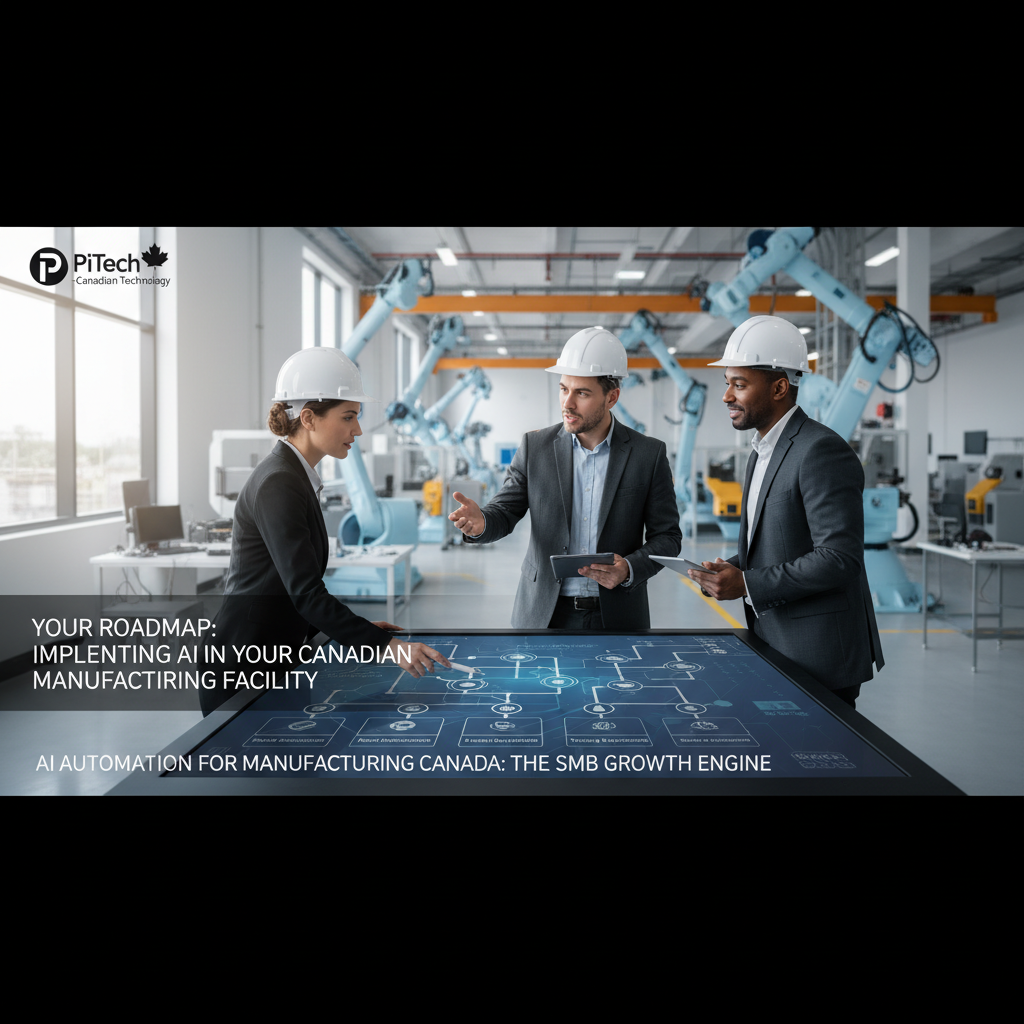
The prospect of implementing AI can feel daunting for an SMB. The key is to reject the "boil the ocean" approach and instead adopt a phased, strategic methodology that focuses on generating tangible value at every step. This practical roadmap breaks the journey down into manageable stages, de-risking the investment and building internal momentum for a full digital transformation. Focusing on a clear manufacturing process optimization AI strategy is crucial for success.
Start Small: Identifying High-Impact, Low-Risk Pilot Projects
The most common mistake is attempting a massive, facility-wide overhaul from day one. This approach is expensive, disruptive, and has a high risk of failure. A far more effective strategy is to begin with a pilot project that targets a single, well-defined, and high-pain problem. The ideal pilot project should have a clear metric for success and the potential for a quick, demonstrable return on investment.
Start by asking your team: Where is our biggest source of waste? What is our most frequent cause of downtime? Where do our most costly quality errors occur? The answers will point you toward excellent candidates for an initial AI project. For example, implementing an AI vision system on the single production line responsible for 60% of your product defects is a perfect starting point. Or, applying predictive maintenance sensors to the one legacy machine whose failure would halt all operations. Success in a small, contained project provides a powerful proof of concept, making it much easier to secure buy-in for future, more ambitious initiatives.
Building the Business Case: Calculating the True ROI of AI Automation
To get executive and financial approval, you need to speak the language of business value. Go beyond the technical benefits and build a solid business case centered on Return on Investment (ROI). This requires a thorough analysis of both the costs and the expected returns. Costs include not only the software and hardware but also integration, training, and potential consultant fees.
On the returns side, quantify everything you can. For a predictive maintenance project, calculate the current annual cost of unplanned downtime (lost production hours x revenue per hour + emergency repair costs). For an AI quality control project, measure the current cost of scrap, rework, and warranty claims. For a scheduling optimization project, quantify the value of a 10% increase in throughput or a 15% improvement in on-time delivery. Presenting a clear financial model that projects payback in months, not years, makes the investment decision far more straightforward and compelling.
Addressing the Human Element: Upskilling Your Workforce for a Smart Factory Future
One of the biggest internal obstacles to adopting Canadian small business automation is employee fear of job displacement. It is critical to address this concern proactively and transparently. Frame the implementation of AI not as a tool for replacement, but as a tool for augmentation. The goal is to elevate your human workforce, freeing them from dull, dirty, and dangerous tasks so they can apply their skills to more complex and valuable work.
Develop a clear communication and retraining plan. An operator who once performed manual inspections can be upskilled to become the technician who trains, manages, and maintains the AI vision system. A machinist can be trained to interpret predictive maintenance data and perform higher-level diagnostics. This creates new, more engaging career paths and integrates your team into the smart factory vision. Investing in your people alongside your technology is the key to creating a culture of continuous improvement and innovation, ensuring the long-term success of your automation strategy.
Navigating Government Grants and Funding for Canadian Manufacturing Efficiency
A significant advantage for Canadian manufacturers is the availability of federal and provincial government programs designed to encourage technology adoption. These grants, tax credits, and funding initiatives can substantially de-risk the initial investment in AI and automation, making it more accessible for SMBs.
Programs like the Next Generation Manufacturing Canada (NGen) Global Innovation Cluster, the Industrial Research Assistance Program (IRAP), and various regional development agencies offer funding specifically for projects that improve productivity and competitiveness. Researching these programs should be an integral part of your planning process. Securing a grant can make a project financially viable and accelerate your timeline. Partnering with a technology consultant or vendor experienced in navigating these funding landscapes can be invaluable in preparing a successful application.
Finding the Right Partner for Your Industrial Automation Journey
Embarking on the path to AI adoption is a significant strategic move. Choosing the right technology partner is as critical as choosing the right technology. For a Canadian manufacturing SMB, this partner must be more than just a software vendor; they need to be a strategic guide who understands the unique challenges and opportunities within the Canadian industrial landscape. They need to bridge the gap between complex technology and practical business outcomes.
The market offers a spectrum of solutions, from off-the-shelf software to fully customized platforms. Off-the-shelf products can be great for standard problems, but they often lack the flexibility to address the unique processes and legacy systems found in many SMBs. This is where a partner specializing in custom solutions and integration, like PiTech, becomes essential. Your factory is unique, and your AI solution should be tailored to fit your specific workflows, equipment, and business goals, not the other way around.
At PiTech, our approach to industrial automation Pitech solutions is rooted in partnership. We begin by understanding your business, not just your technical requirements. Our expertise in creating bespoke AI automation for manufacturing Canada allows us to:
* Develop Custom AI and Machine Learning Models: When a standard solution won't work, we build custom models from the ground up. Whether it's developing a unique computer vision algorithm to detect a proprietary defect in your product or creating a predictive model for a one-of-a-kind piece of machinery, we engineer the intelligence your business needs to gain a competitive edge.
* Build Integrated Business Platforms: Data is often trapped in silos: the ERP, the MES, the QC logs. We develop custom software and integrated platforms that act as the central nervous system for your operation. These platforms consolidate data from every corner of your business, apply AI and analysis, and present actionable insights on a single, intuitive dashboard, empowering your team to make data-driven decisions.
* Provide Strategic AI Consulting and Implementation: We guide you through the entire journey. From the initial discovery phase, where we help you identify the highest-ROI pilot projects, to developing a full implementation roadmap, to integrating the new technology with your existing systems. We ensure the solution works not just technically, but also culturally and financially, ensuring a smooth transition and long-term success.
From Surviving to Thriving: The Future of Canadian Manufacturing is Intelligent
The forces of global competition, domestic labour challenges, and supply chain instability are not abating. For Canadian manufacturing SMBs, the path forward is not about cutting costs to the bone or simply working harder. The future belongs to those who work smarter. AI automation for manufacturing Canada is the single most powerful lever available to achieve this, transforming operations from reactive and inefficient to proactive, precise, and highly productive.
We've explored how AI isn't a monolithic, unattainable concept, but a suite of practical tools that can solve your most pressing problems today. Predictive maintenance turns costly downtime into planned upkeep. AI-driven quality control eliminates defects and builds an unimpeachable reputation for quality. Intelligent scheduling squeezes maximum throughput from your existing assets. And workflow automation liberates your team to focus on innovation and growth. This isn't about replacing people; it's about empowering them with tools that amplify their expertise and value.
The journey begins with a single, strategic step. By identifying a high-impact pilot project, building a clear business case, and engaging the right expert partner, you can begin unlocking a new era of efficiency, resilience, and profitability for your manufacturing business. The time for deliberation is over; the time for intelligent action is now.
Ready to unlock efficiencies and drive growth with AI automation in your Canadian manufacturing operation? PiTech specializes in developing custom AI solutions that deliver real-world results. Talk to a PiTech AI expert today for a free consultation to identify your biggest opportunities for optimization.
Ready to Transform Your Business?
Let PiTech help you implement these strategies with proven technology solutions.
Get StartedRelated articles
- Streamline Your Business: Custom Automation for Canadian SMBsUnlock operational efficiency and growth. Learn how custom workflow automation helps Canadian SMBs reduce costs, eliminate errors, and scale smarter. Start here.
- AI Automation in Manufacturing: A Guide for Canadian BusinessesStruggling with downtime and inefficiency? Discover how AI automation for manufacturing in Canada is solving critical challenges from quality control to predictive maintenance.
- Custom Sales Process Automation: The B2B Growth EngineDiscover how custom sales process automation in Canada can fix pipeline leaks, boost efficiency, and drive revenue for your B2B enterprise. Go beyond CRM.
- Unlock Growth with Custom Lead Generation Software CanadaStruggling with generic CRMs? Discover how custom lead generation software helps Canadian SMBs reduce costs, increase qualified leads, and automate sales.